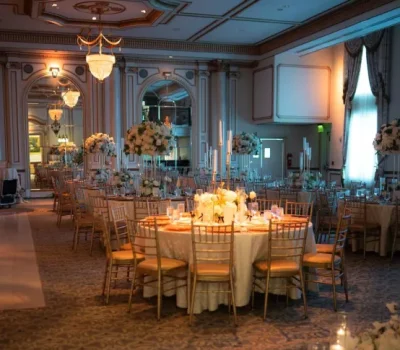
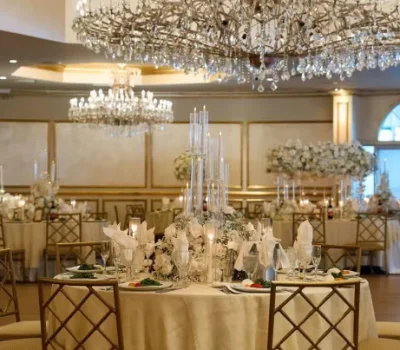
Fort Greene occupies a particular sweet spot in Brooklyn’s geography and personality. Close enough to downtown to feel connected to the city’s pulse. Residential enough to have its own quiet blocks lined with brownstones and mature trees. Cultural enough – BAM, the Mark Morris Dance Center, galleries and bookshops along Fulton Street – that the couples who choose to get married here tend to have sharp taste and zero patience for anything generic. Bloom Wedding Florist Brooklyn has designed wedding florals for Fort Greene celebrations in historic venues, cultural institutions, neighborhood restaurants, and private homes where the parlor floor alone had more architectural interest than most dedicated event spaces in the borough.
That’s not an insult. It’s a compliment and a useful starting point for floral design. In other neighborhoods, we spend the first chunk of a consultation helping couples figure out what they’re drawn to. In Fort Greene, the conversation usually starts with a list of things they’ve already ruled out. No baby’s breath. No mason jars. Nothing that looks like it came off a conveyor belt. Nothing overly precious. Nothing that screams “wedding florist template number four.”
What they do want takes longer to articulate, and that’s where our job gets interesting. The desires come out in fragments. “Something that feels grown, not arranged.” “We want it to look expensive without being over-the-top.” “Our friend got married at a barn upstate and everything looked the same as every other barn wedding – we don’t want that.” These are aesthetic instincts, not design briefs, and translating them into a concrete floral plan requires a designer who can decode emotional language into botanical choices.
We’ve gotten good at this particular translation because Fort Greene couples have been handing us this kind of brief for years. The flowers they respond to most tend to share certain qualities: textural complexity, muted or sophisticated color palettes, organic shapes that resist symmetry, and a sense of restraint that reads as confident rather than minimal. Getting there requires a florist who can distinguish between “less” and “intentionally edited” – two things that look similar in a photo but feel completely different in a room.
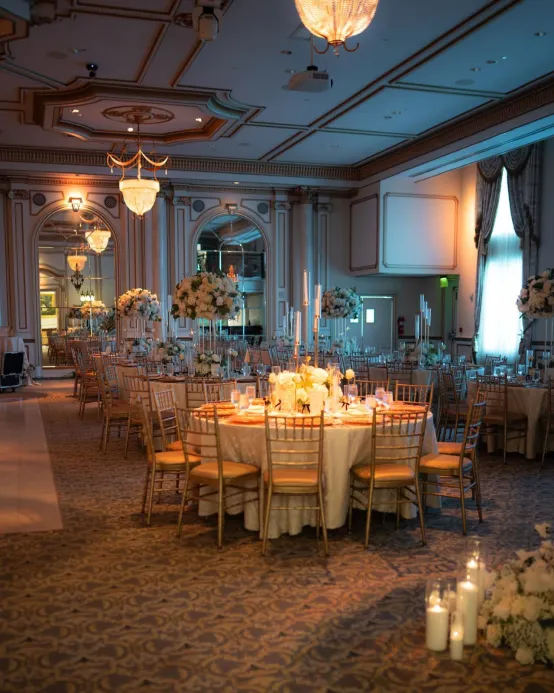
The neighborhood’s venue mix is eclectic. No single type dominates, which means our design approach resets completely from one Fort Greene wedding to the next.
BAM (Brooklyn Academy of Music). Getting married at BAM carries cultural cachet. The spaces range from intimate event rooms to the grand Howard Gilman Opera House lobby, and each demands a different floral scale. The smaller rooms have strong existing character – dark walls, theatrical lighting, architectural details that reflect the institution’s artistic identity. Heavy floral presence in these rooms fights the mood rather than supporting it. A few intentional arrangements and strong personal flowers let the space speak. The larger event areas need more – statement pieces at the entrance, reception centerpieces with enough visual authority to fill rooms designed for art openings and galas.
The General Greene. A restaurant that hosts intimate weddings and rehearsal dinners with a farm-to-table ethos that extends to the decor. Floral design here should feel connected to the food philosophy – seasonal, local, unpretentious. Elaborate structural centerpieces would look absurd on these tables. We’ve done dinners at The General Greene using nothing but herb-accented bud vases and a simple garland down the communal table. The restaurant’s own aesthetic did the rest. Knowing when your flowers should whisper instead of shout is a skill most florists never develop because they think more always means better. In this room, it absolutely doesn’t.
Roulette Intermedium. A performing arts venue in the neighborhood that hosts events in a raw, gallery-adjacent space. High ceilings, open floor plans, a creative energy embedded in the walls. This space invites experimentation. An asymmetrical ceremony installation that wouldn’t make sense in a traditional ballroom feels completely at home here. Ground-level arrangements scattered like a wild meadow across a concrete floor? We’ve done it at Roulette and the photographer couldn’t stop shooting the setup before guests even arrived.
Fort Greene brownstones. The neighborhood’s residential architecture is stunning. Full-floor parlors with original plasterwork, marble fireplaces, ceiling heights that make you forget you’re inside a rowhouse. Brownstone weddings in Fort Greene function differently than in Park Slope – the aesthetic here tends to lean slightly more urban-sophisticated and slightly less family-backyard. The floral design responds accordingly. Tighter arrangements, more refined vessel choices, color palettes that play off the interior architecture specifically.
Fort Greene Park sits at the neighborhood’s center, anchored by the Prison Ship Martyrs’ Monument – a massive Doric column on a hill with sweeping views. Couples with park permits have held ceremonies on the hill, in the meadow areas, and near the monument itself. These outdoor setups carry the standard challenges of public park ceremonies – no infrastructure, no electricity, no guaranteed weather, and foot traffic from runners, dog walkers, and families who aren’t part of the wedding.
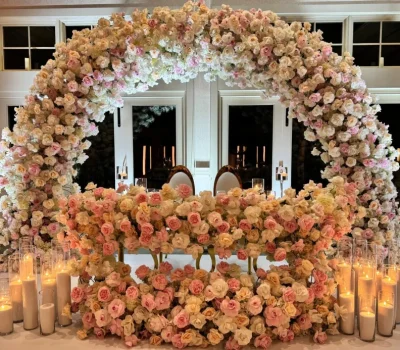
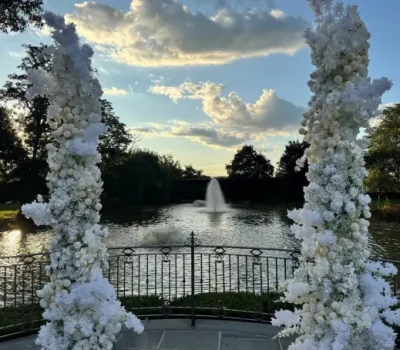
We design Fort Greene Park ceremony florals to be entirely self-contained. Freestanding arch or backdrop with weighted base. Ground-level arrangements that anchor the ceremony space without requiring stakes or attachments to park property. Personal flowers that look stunning against grass and trees. Everything carried in by hand, set up within ninety minutes, and removed without leaving a trace. The park requires this, and our crew has practiced it enough to make the process feel effortless even though it’s genuinely labor-intensive.
Restaurants and small event spaces along Lafayette Avenue and the surrounding blocks host a surprising number of weddings, rehearsal dinners, and engagement parties. These are tight spaces – 40 to 60 person capacity – where every floral piece needs to earn its real estate. A centerpiece that’s two inches too wide collides with a neighbor’s water glass. A ceremony arrangement at the front of a narrow room blocks the server path. We measure these spaces during the walkthrough and design to the inch. There’s no margin for approximation when you’re working inside a neighborhood restaurant that wasn’t built for event production.
If we had to describe the Fort Greene floral sensibility in a single word, it would be “curated.” Not maximal. Not minimal. Curated – meaning every element was chosen deliberately, nothing is there by default, and the overall composition reflects a point of view rather than a checklist.
In practice, this translates to arrangements that mix unexpected varieties alongside classics. A garden rose next to a scabiosa pod. A ranunculus bud tucked against a spray of jasmine that trails off the vessel’s edge. A single chocolate cosmos bloom sitting among ivory lisianthus, adding a depth note that nobody can quite identify but everyone notices. These kinds of combinations don’t happen accidentally. They require a floral designer who thinks about arrangements the way a chef thinks about a plate – every ingredient contributing something specific, nothing redundant, the whole thing greater than the parts.
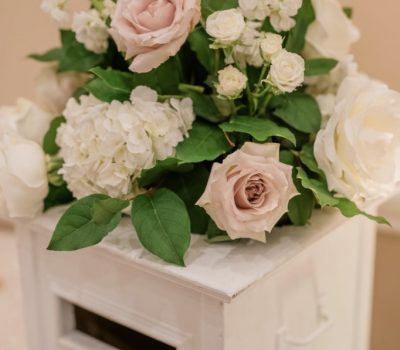
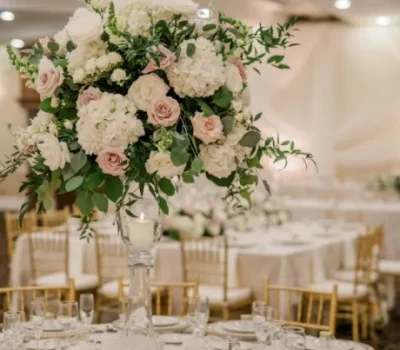
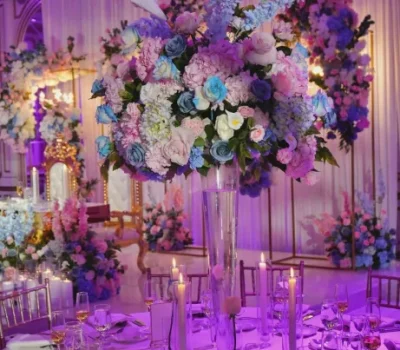
We also see Fort Greene couples gravitating toward desaturated palettes more often than not. Dusty mauve over hot pink. Sage over kelly green. Antique gold over bright yellow. Faded lavender over vivid purple. These toned-down versions of color carry sophistication without austerity. They photograph beautifully in both natural and ambient light. And they pair well with the brownstone interiors and muted architectural tones that define the neighborhood’s visual character.
Fort Greene’s proximity to BAM, BRIC, and the broader cultural ecosystem of downtown Brooklyn means that some of the weddings we design here overlap with the art and performance world. Couples who are artists, musicians, dancers, or work in creative fields. Events where the wedding itself is structured less like a traditional ceremony-reception format and more like a curated evening with performances, installations, and communal meals.
Floral design for these weddings requires flexibility and a willingness to abandon conventional placement logic. Flowers as a stage element. Arrangements that interact with a performance piece. A ceremony backdrop that doubles as an art installation the couple created alongside us. These projects push our team into territory where “wedding florist” doesn’t fully capture what we’re doing. We’re collaborating. Co-creating. Functioning more like a design studio than a flower shop.
One Fort Greene wedding we designed for a couple who were both visual artists involved a series of floral “interventions” throughout the venue – small, surprising arrangements placed in unexpected locations. Inside a bookshelf. Hanging from a coat hook in the entryway. Sitting on the bathroom sink next to the soap. Tucked into the DJ booth. None of them were traditional placements. All of them delighted guests who discovered them organically throughout the night. The couple described the floral design as “an exhibition within a celebration,” and that framing felt exactly right.
Brownstone weddings here share some logistics with Park Slope – narrow doorways, stairs between floors, no dedicated staging area – but the aesthetic expectations run differently. Fort Greene brownstone interiors tend toward curated eclecticism. Built-in bookshelves alongside mid-century furniture alongside original Victorian woodwork. The floral design has to thread through all of those visual layers without adding clutter to an already richly decorated space.
We’ve learned that subtraction is our most powerful tool in these homes. Walk in. Look at what’s already on the mantel, the console table, the dining room sideboard. Decide what stays and what gets temporarily relocated to make room for floral pieces. A mantel arrangement works best when the homeowner’s existing objects – candles, photographs, books – are cleared away to give the flowers a clean stage. A dining room centerpiece needs clear space around it, which means the salt cellar collection and the stack of mail get moved to another room for the evening.
This curatorial approach to styling within an existing home requires permission and sensitivity. We’re rearranging someone’s personal space. We ask first. We photograph the existing setup before we move anything. We put everything back exactly where it was during breakdown. Respect for the home is respect for the people who live in it, and that respect shows in how carefully our crew operates inside private Fort Greene residences.
More Fort Greene weddings are structured as dinner parties than in any other neighborhood we serve. Not cocktail-style standing receptions. Not banquet hall seated affairs. Actual dinner parties. One long table. Eight courses. Conversation that flows from end to end. The evening structured around the meal itself rather than a DJ timeline.
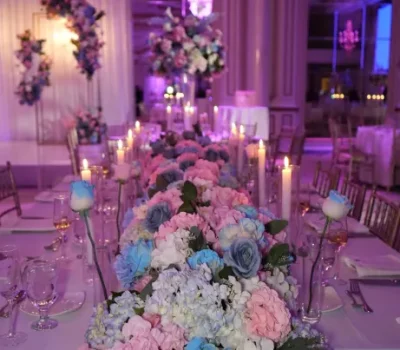
These dinner party weddings require a specific floral approach. The table is the entire venue. Everything happens on it and around it for three or four hours. The garland or runner down the center becomes the primary design element of the whole event. Candle placement, bud vase intervals, napkin blooms, place card accents – every detail on the table surface carries disproportionate weight because guests are staring at it from appetizer through dessert.
We build dinner party wedding florals with obsessive table-level detail. The garland doesn’t just run down the center – it’s designed with sight corridors so people sitting across from each other can make eye contact through the greenery. Candle heights are varied to create light at different planes. Bud vases are placed at the intersections between place settings rather than in front of anyone’s plate. A fruit accent or a trailing vine creates visual rhythm along the table’s length, breaking the garland into chapters rather than one continuous wall of green.
These projects are intimate, precise, and deeply satisfying to design. When a Fort Greene couple tells us they want a dinner party, not a reception, we know exactly what that means – and we get genuinely excited about the level of detail the format allows.
Fort Greene streets are standard brownstone Brooklyn – tree-lined, residential, alternate-side parking rules, and limited curb availability on weekends. We route deliveries through Myrtle Avenue or Fulton Street depending on the venue location and time of day. Early morning load-ins before 7 AM find reasonable parking. Anything later and we’re competing with brunch traffic and weekend shoppers.
For venue deliveries – BAM, restaurants, event spaces – we coordinate with the venue’s service entrance schedule. BAM in particular has specific loading dock protocols and security clearance requirements that need to be arranged days in advance. A florist who shows up at the front door with a cart of arrangements is getting turned around. We’ve been through their process enough times that our production manager has the dock coordinator’s direct number saved in her phone.
Brownstone deliveries happen through the front door. Period. No loading dock. No service entrance. No shortcut. The parlor floor is usually one flight up from the stoop, which means every arrangement climbs stairs. We hand-carry, one piece at a time, up the front steps and through the entry hall. The arch gets assembled inside. The garland sections get linked on the staircase itself. Large installations are modular by necessity because a seven-foot finished piece isn’t fitting through a four-foot doorway.
Spring wakes Fort Greene up. The park fills with blossoms, the brownstone stoops get planted with window boxes, and outdoor ceremony options become viable by late April. Spring floral palettes here lean toward the muted end of the pastel spectrum – dusty blush, sage, cream, touches of lavender. Nothing candy-colored. Fort Greene couples prefer their pastels with a grain of sophistication.
Summer brings full canopy to the tree-lined blocks and peak heat inside un-air-conditioned brownstones. We’ve designed July brownstone weddings where we kept the flowers out of direct sun patches that moved across the parlor floor throughout the afternoon. A centerpiece sitting in a beam of July sunlight for two hours wilts visibly. Placed three feet to the left in the shade? It lasts the entire reception. Those micro-adjustments sound obsessive. In a brownstone without AC, they’re the difference between fresh flowers at midnight and sad ones by 9 PM.
Fall is peak Fort Greene. The neighborhood’s tree canopy turns amber and gold. The brownstones glow in late afternoon light. October and November weddings here produce our most cohesive portfolio images because every element – architecture, natural light, foliage, and floral design – exists in the same warm tonal range. We lean into that harmony unapologetically. Rust dahlias, caramel roses, dried grasses, chocolate cosmos, persimmon accents. The neighborhood becomes the mood board.
Winter tightens the focus indoors. Parlor floor ceremonies by the fireplace. Candlelit dinner party receptions for forty. Deep palettes – wine, forest, midnight blue, ivory. Branches with interesting silhouettes standing in tall vessels near the windows. Fewer flowers, more texture, and candles everywhere. Winter Fort Greene weddings have an introspective warmth that’s genuinely unique to this neighborhood’s indoor spaces.
The Fort Greene wedding vendor community is tight and collaborative. Planners who specialize in the neighborhood know every brownstone’s quirks. Photographers who shoot here regularly understand the light on specific blocks at specific hours. Caterers who work these events can navigate a kitchen the size of a hallway. We fit into this ecosystem as the floral team that other vendors want on the call sheet because we communicate clearly, show up on time, and don’t create problems that cascade onto their timelines.
One Fort Greene planner we work with regularly sends us the floral section of her proposals with the note “you know the space – just tell me what works.” That level of trust took years to build and it saves everyone time. We know her client profile. She knows our capabilities. The couple benefits from a vendor team that’s already in sync before the first planning call happens.
Pretty isn’t enough in this neighborhood. The flowers also need to be smart – smart in their placement, their palette, their relationship to the space, their restraint, and their moments of surprise. Fort Greene couples notice the thinking behind the design, not just the surface beauty. A thoughtful choice lands harder here than an expensive one.
Bloom Wedding Florist Brooklyn has been designing for Fort Greene’s specific standards long enough to know what thoughtful looks like in this neighborhood – and what generic looks like, and the gap between the two. Call (929) 673-2834 or come to our studio at 111 Herkimer St, Brooklyn, NY 11216. Bring your venue photos, your list of things you definitely don’t want, and the half-formed instincts about what you do. We’ll help you finish the thought.